
Blogs
I just got a recent call from a woman who has been a client for approximately 9 months. She was set up on a payment plan, however has not made a payment in over five months. It turns out that one of the creditors has obtained a judgment and has now served her employer with+ Read More
The post I Provide Solutions, But I Can’t Make You Follow Through appeared first on David M. Siegel.

If you’ve got a debt from years ago, don’t make the mistake of prolonging the negative impact is has on your credit history.
Old debts can plague your credit for years, dragging down your score long after the date you went into default.
In fact, according to credit reporting agency Equifax, a collection account will usually remain on your credit report for seven years from the date the account first became past due.
That means a debt six years past due will stay on your credit report for one more year, at which time it falls off your credit report.
Once a debt falls off your credit report, it will no longer drag down your credit score.
But let’s say you’re impatient and decide to settle a debt that’s five years old. Smart move, right?
Not necessarily.
Credit accounts generally remain on your credit file for up to ten years from the date of last activity on the account. That means the debt will be reported for ten years following the date of payment – so if you pay a debt in full after five years, it will be reported for a total of 15 years (5 years of past due status PLUS 10 years of reporting after payment in full).
If you’ve paid the debt in full on a timely basis, that’s not terrible. The history of payment shows you were on top of things, and there’s no negative notation on your credit file.
But if the debt was past due or charged off, paying it after five years means there is an additional decade during which the notation that it was paid after being past due will show up on your credit report.
That may not drag your score down for more than a few years, but it still means you may have some explaining to do in the event that a new lender pulls your credit report.
The better way might be to simply … do nothing. Let the unpaid debt fall off your credit report and move on with your life once it’s gone.
That tactic may not work for everyone in every situation. For example, if you need to resolve some old debt in order to get a new job then you don’t have the luxury of time.
In addition, there’s always the chance that the creditor sues you during the applicable statute of limitations. In that case, you may have larger legal obligations to worry about.
But if you’ve got the ability to wait it out – and are prepared for the consequences of your actions, both good and bad – it may not be a bad idea.
Gubernatorial candidate Nathan Deal is reeling after a U.S. bankruptcy judge ordered the reopening of a 2009 bankruptcy filing by Deal’s daughter Carrie Deal Wilder and his son-in-law Clint Wilder. A U.S. bankruptcy trustee sought to reopen the Wilders’ case after it was revealed that Clint Wilder was not eligible for a discharge of his... Read more »
The post Failure To Disclose Previous Bankruptcy Jeopardizes Discharge appeared first on Allmand Law Firm PLLC.
One of the things most people want to know when considering bankruptcy is how soon after filing bankruptcy can they obtain credit. The answer to this will vary from case to case but there is a relatively simple formula to follow. After your case is filed, you can apply immediately for a secured credit card.+ Read More
The post How To Build Credit After Bankruptcy appeared first on David M. Siegel.
"Post hoc ergo propter hoc" - Latin for "after this, therefore because of this." This episode from West Wing assumes that at least one of the 27 lawyers in the room would know what it means. Even Sheldon in Bing Bang understands this logical fallacy and so does Spock.
Logical Fallacy
Wikipedia explains this is a logical fallacy of questionable causation, meaning that "since event Y followed event X, event Y must have been caused by event X" and gives this example: "The rooster crows immediately before the sunrise, therefor the rooster causes the sun to rise." Here is a further explanation.
5th and 11th Circuit
Huss v. Gayden, 571 F.3d 442 (5th Cir. 2009) cites the 11th Circuit's explanation and use of this logical fallacy in McClain v. Metabolife International, Inc. 401 F.3d 1233, 1243 (11th Cir. 2005) in the determination of the admissibility of expert testimony under a Daubert analysis. The Court in Huss reviewed that it "is axiomatic that causation testimony is inadmissible if an expert relies upon studies or publications, the authors of which were themselves unwilling to conclude that causation had been proven." Gen. Elec. Co. v Joiner, 522 U.S. 136, 145-46 (1997). Judge Moore of the Southern District cites McClain in the case of Kilpatrick v. Breg, Inc.,2009 WL 2058384 *9, (S.D. Fla. 2009).
Chapter 13 Context
The Court in In re Seger referred to this logical fallacy in the case of In re Seger, 444 B.R. 492 (Bank. D. Mass. 2011) regarding the administrative obligations of chapter 13 debtors who engage in business. The Court explained that while a
statement of receipts and disbursements may include receipts and disbursements reflected on a bank statement it will also include all other transactions . . . such as cash and credit card transactions. In fact, a statement of receipts and disbursements may be required even when there are no financial transactions whatsoever and there is no bank account.
More
Here is an explanation of further logical fallacies and critical thinking that would help a lawyer.
Jordan E. Bublick is a Miami Bankruptcy Lawyer with over 25 years of experience in filing Chapter 13 and Chapter 7 Bankruptcy Cases and Mortgage Modifications (305) 891-4055
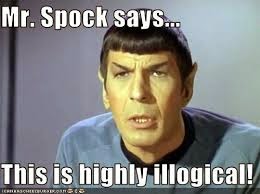 "Post hoc ergo propter hoc" - Latin for the fallacy of reasoning of "after this, therefore because of this." President Bartlet in this episode from West Wing challenged the 27 lawyers in the room that at least one of them would know the meaning of this Latin phrase. Fortunately, a few of them did. Sheldon in this clip from the BigBang is also familiar with this logical fallacy.
Logical Fallacy
Spock explains this fallacy of reasoning very well here. In short, what Spock is saying is that "post hoc ergo propter hoc" is a logical fallacy referring to questionable causation, that is, "since event Y followed event X, event Y must have been caused by event X." This example is given: "The rooster crows immediately before the sunrise, therefor the rooster causes the sun to rise." Even Ernie on Sesame Street falls victim to this fallacy of reasoning in this clip where he reached the conclusion that it is the banana in his ear that is keeping the alligators away.
5th and 11th Circuit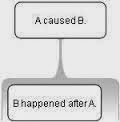
The courts are on guard to avoid this logical fallacy. Huss v. Gayden, 571 F.3d 442 (5th Cir. 2009) cites the 11th Circuit's explanation of and avoidance of this logical fallacy in McClain v. Metabolife International, Inc. 401 F.3d 1233, 1243 (11th Cir. 2005) in the determination of the admissibility of expert testimony under a Daubert analysis. The Court in Huss reviewed that it "is axiomatic that causation testimony is inadmissible if an expert relies upon studies or publications, the authors of which were themselves unwilling to conclude that causation had been proven." Gen. Elec. Co. v Joiner, 522 U.S. 136, 145-46 (1997). Judge Moore of the Southern District cites McClain in the case of Kilpatrick v. Breg, Inc.,2009 WL 2058384 *9, (S.D. Fla. 2009), which decision was upheld on appeal. Actually, the McClain case is a landmark decision in the world of "junk science" and toxic torts and product liability. This article reviews the related "pithy legalism" of Judge Richard Posner that the "the courtroom is not the place of scientific guesswork, even of the inspired sort. Law lags science; it does not lead it." Rosen v. Ciba-Geigy Corp., 78 F.3d 316, 319 (7th Cir. 1996).
More Logical Fallacies to Avoid
- "Argumentum ad Hominen" - argument directed to the person - instead of attacking the opponent's argument, the character of the opponent is attacked.
- "Argumentum ad Misericordian" - an appeal to pity - the audience is asked to accept an argument not due to the strength of the argument but rather because of the speaker's piteous circumstances.
- "Argumentum ad Populum" - the appeal to emotion - the attempt to establish its conclusion with values the speaker's audience holds dear.
- "Ignoratio Elenchi" - proving an irrelevant conclusion - attacking the "straw man".
- "Petitio Principii" - a circular argument - begging the question.
The Beatles 
It is now known that the Beatles' song were full, full, full of logical fallacies, such as: sweeping generalizations ("all you need is love"), ad agnorantium/appeal to ignorance ("no where man, please listen, you don't know what you're missing"), oversimplification ("it's easy"), straw man ("everywhere there's lot of piggies living piggy lives"), and a popular idea must be correct ("I get by with a little help from my friends"). But actually the Beatles do show that warn against making logical fallacies: ("Think of what you're saying, you can get it wrong, and still you think that it's all right.")
Further
Here is an explanation of further logical fallacies and critical thinking that may help a lawyer. Here is more and more and more and more and more and finally the logical fallacy that has caused some much trouble: "Home prices have not fallen since the Great Depression. Therefore, home prices will not fall."Jordan E. Bublick is a Miami Bankruptcy Lawyer with over 25 years of experience in filing Chapter 13 and Chapter 7 Bankruptcy Cases and Mortgage Modifications (305) 891-4055
"Post hoc ergo propter hoc" - Latin for the fallacy of reasoning of "after this, therefore because of this." President Bartlet in this episode from West Wing challenged the 27 lawyers in the room that at least one of them should know the meaning of this Latin phrase. Fortunately, a few of them did. Sheldon in this clip from the Big Bang is also familiar with this logical fallacy.
Logical Fallacy
Spock explains this fallacy of reasoning very well here. In short, what Spock is saying is that "post hoc ergo propter hoc" is a logical fallacy referring to questionable causation, that is, "since event Y followed event X, event Y must have been caused by event X." This example is given: "The rooster crows immediately before the sunrise, therefor the rooster causes the sun to rise." Even Ernie on Sesame Street falls victim to this fallacy of reasoning in this clip where he reached the conclusion that it is the banana in his ear that is keeping the alligators away.
5th and 11th Circuit
The courts are on guard to avoid this logical fallacy. Huss v. Gayden, 571 F.3d 442 (5th Cir. 2009) cites the 11th Circuit's explanation of and avoidance of this logical fallacy in McClain v. Metabolife International, Inc. 401 F.3d 1233, 1243 (11th Cir. 2005) in the determination of the admissibility of expert testimony under a Daubert analysis. The Court in Huss reviewed that it "is axiomatic that causation testimony is inadmissible if an expert relies upon studies or publications, the authors of which were themselves unwilling to conclude that causation had been proven." Gen. Elec. Co. v Joiner, 522 U.S. 136, 145-46 (1997). Judge Moore of the Southern District cites McClain in the case of Kilpatrick v. Breg, Inc.,2009 WL 2058384 *9, (S.D. Fla. 2009), which decision was upheld on appeal. Actually, the McClain case is a landmark decision in the world of "junk science" and toxic torts and product liability. This article reviews the related "pithy legalism" of Judge Richard Posner that the "the courtroom is not the place of scientific guesswork, even of the inspired sort. Law lags science; it does not lead it." Rosen v. Ciba-Geigy Corp., 78 F.3d 316, 319 (7th Cir. 1996).
More Logical Fallacies to Avoid
- "Argumentum ad Hominen" - argument directed to the person - instead of attacking the opponent's argument, the character of the opponent is attacked.
- "Argumentum ad Misericordian" - an appeal to pity - the audience is asked to accept an argument not due to the strength of the argument but rather because of the speaker's piteous circumstances.
- "Argumentum ad Populum" - the appeal to emotion - the attempt to establish its conclusion with values the speaker's audience holds dear.
- "Ignoratio Elenchi" - proving an irrelevant conclusion - attacking the "straw man".
- "Petitio Principii" - a circular argument - begging the question.
The Beatles
It is now known that the Beatles' song were full, full, full of logical fallacies, such as: sweeping generalizations ("all you need is love"), ad agnorantium/appeal to ignorance ("no where man, please listen, you don't know what you're missing"), oversimplification ("it's easy"), straw man ("everywhere there's lot of piggies living piggy lives"), and a popular idea must be correct ("I get by with a little help from my friends"). But actually the Beatles do show that warn against making logical fallacies: ("Think of what you're saying, you can get it wrong, and still you think that it's all right.")
Further
Here is an explanation of further logical fallacies and critical thinking that may help a lawyer. Here is more and more and more and more and more and finally the logical fallacy that has caused some much trouble: "Home prices have not fallen since the Great Depression. Therefore, home prices will not fall."Jordan E. Bublick is a Miami Bankruptcy Lawyer
 "Post hoc ergo propter hoc" - Latin for the fallacy of reasoning of "after this, therefore because of this." President Bartlet in this episode from West Wing challenged the 27 lawyers in the room that at lease one of them should know the meaning of this Latin phrase. Fortunately, a few of them sorta did. Sheldon in Big Bang also is familiar with this fallacy.
Logical FallacySpock explains this logical fallacy very well here. In short, what Spock is saying is that "post hoc ergo propter hoc" is a logical fallacy referring to questionable causation, that is, "since event Y followed event X, event Y must have been caused by event X." This example is given: "The rooster crows immediately before the sunrise, therefor the rooster causes the sun to rise." Even Ernie on Sesame Street falls victim to this fallacy of reasoning in this clip where he reached the conclusion that it is the banana in his ear that is keeping the alligators away.
5th and 11th Circuit
The courts are on guard to avoid this logical fallacy. Huss v. Gayden, 571 F.3d 442 (5th Cir. 2009) cites the 11th Circuit's explanation of and avoidance of this logical fallacy in McClain v. Metabolife International, Inc. 401 F.3d 1233, 1243 (11th Cir. 2005) in the determination of the admissibility of expert testimony under a Daubert analysis. The Court in Huss reviewed that it "is axiomatic that causation testimony is inadmissible if an expert relies upon studies or publications, the authors of which were themselves unwilling to conclude that causation had been proven." Gen. Elec. Co. v Joiner, 522 U.S. 136, 145-46 (1997). McClain is a landmark decision in the world of "junk science" and toxic torts and product liability.
Judge Richard Posner wrote a "pithy legalism" that the "the courtroom is not the place of scientific guesswork, even of the inspired sort. Law lags science; it does not lead it." Rosen v. Ciba-Geigy Corp., 78 F.3d 316, 319 (7th Cir. 1996) his Article
More Logical Fallacies to Avoid
- "Argumentum ad Hominen" - argument directed to the person - instead of attacking the opponent's argument, the character of the opponent is attacked.
- "Argumentum ad Misericordian" - an appeal to pity - the audience is asked to accept an argument not due to the strength of the argument but rather because of the speaker's piteous circumstances.
- "Argumentum ad Populum" - the appeal to emotion - the attempt to establish its conclusion with values the speaker's audience holds dear.
- "Ignoratio Elenchi" - proving an irrelevant conclusion - attacking the "straw man".
- "Petitio Principii" - a circular argument - begging the question.

The Beatles
It is now known that the Beatles' song were full, full, full of logical fallacies, such as: sweeping generalizations ("all you need is love"), ad agnorantium/appeal to ignorance ("no where man, please listen, you don't know what you're missing"), oversimplification ("it's easy"), straw man ("everywhere there's lot of piggies living piggy lives"), and a popular idea must be correct ("I get by with a little help from my friends"). But here Paul actually warns making logical fallacies: ("Think of what you're saying, you can get it wrong, and still you think that it's all right.")
Further
Here is an explanation of further logical fallacies and critical thinking that may help a lawyer. Here is more and more and more and more and more and finally the logical fallacy that has caused some much trouble: "Home prices have not fallen since the Great Depression. Therefore, home prices will not fall."Jordan E. Bublick - Miami Bankruptcy Lawyer - Kendall & Aventura Offices - (305) 891-4055 - www.bublicklaw.com
When the bankruptcy laws were changed on October 17, 2005, there was an effort to curb abusive filings. To do so, a means test was authored utilizing IRS standards for acceptable expenses. In addition to the means test, there were requirements such as having completed a credit counseling session before a case can be filed+ Read More
The post Interesting Development in Some Chapter 13 Bankruptcy Cases appeared first on David M. Siegel.
Dismissing and Re-filing a Chapter 13 There are certain circumstances where you may want to dismiss your chapter 13 case and refile. You do have the ability to do this. There are certain circumstances where you may have to wait six months to refile. This would be the case where you want to dismiss the+ Read More
The post Can I Dismiss My Bankruptcy & Refile? appeared first on David M. Siegel.
 Updated daily, this blog will keep you informed on the latest bankruptcy news!
  Learn more about how Bankruptcy works and what you need to know.